
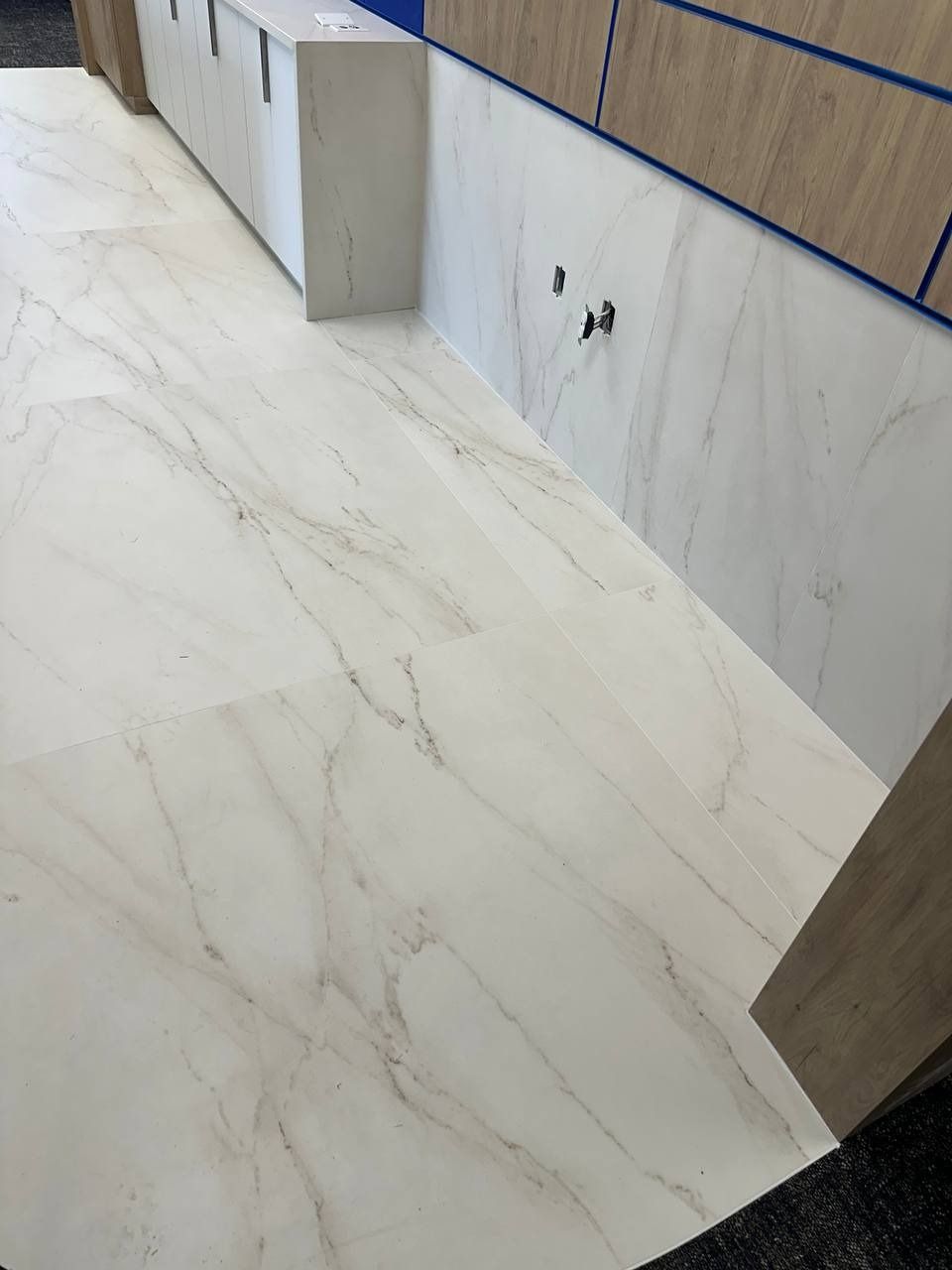
The actual difference
The North American tile standard, ANSI A137.1, draws the line at water absorption. A tile that absorbs 0.5 percent or less counts as porcelain. Anything above that is ceramic. Looks don’t come into it, and a label can be wrong, so check the spec sheet. If you want proof, look for the Porcelain Tile Certification Agency mark.
Which one where
- Entries and mudrooms: porcelain. Road salt and meltwater are hard on anything more porous.
- Basement floors: porcelain, for the same reason, and because slabs can give off moisture.
- Kitchen and bathroom floors: porcelain is the safer choice. A floor-rated ceramic can work in a light-use room.
- Shower walls: either, over proper waterproofing. The membrane keeps the water out of the wall, not the tile.
- Backsplashes and feature walls: ceramic is usually fine, and easier to cut around outlets.
- Big panels and slabs: almost always porcelain.
What porcelain asks of the installer
Porcelain is dense and hard, so it needs a sharper blade and more time at the saw. Because it absorbs so little, it also needs a mortar made for porcelain, with full coverage on large tile. That’s part of why two quotes for the same room can differ. See what moves the price of a tile job.
Slip resistance is a separate question
Porcelain can be polished smooth or textured for grip, so the name tells you nothing about slipperiness. Look for the wet DCOF number. The tile standard asks for 0.42 or higher on level indoor floors that get walked on when wet. That doesn’t make a tile slip-proof, and it isn’t aimed at places with standing water. Shower floors usually do better with small mosaics, because all those grout joints add grip.
Before you buy
- Ask for the spec sheet: water absorption and wet DCOF.
- Buy enough from one lot, plus extra for cuts. Colour can vary between lots.
- Check that it’s rated for floors if it’s going on a floor.
- Not sure about a tile? Send us a photo of the box.