
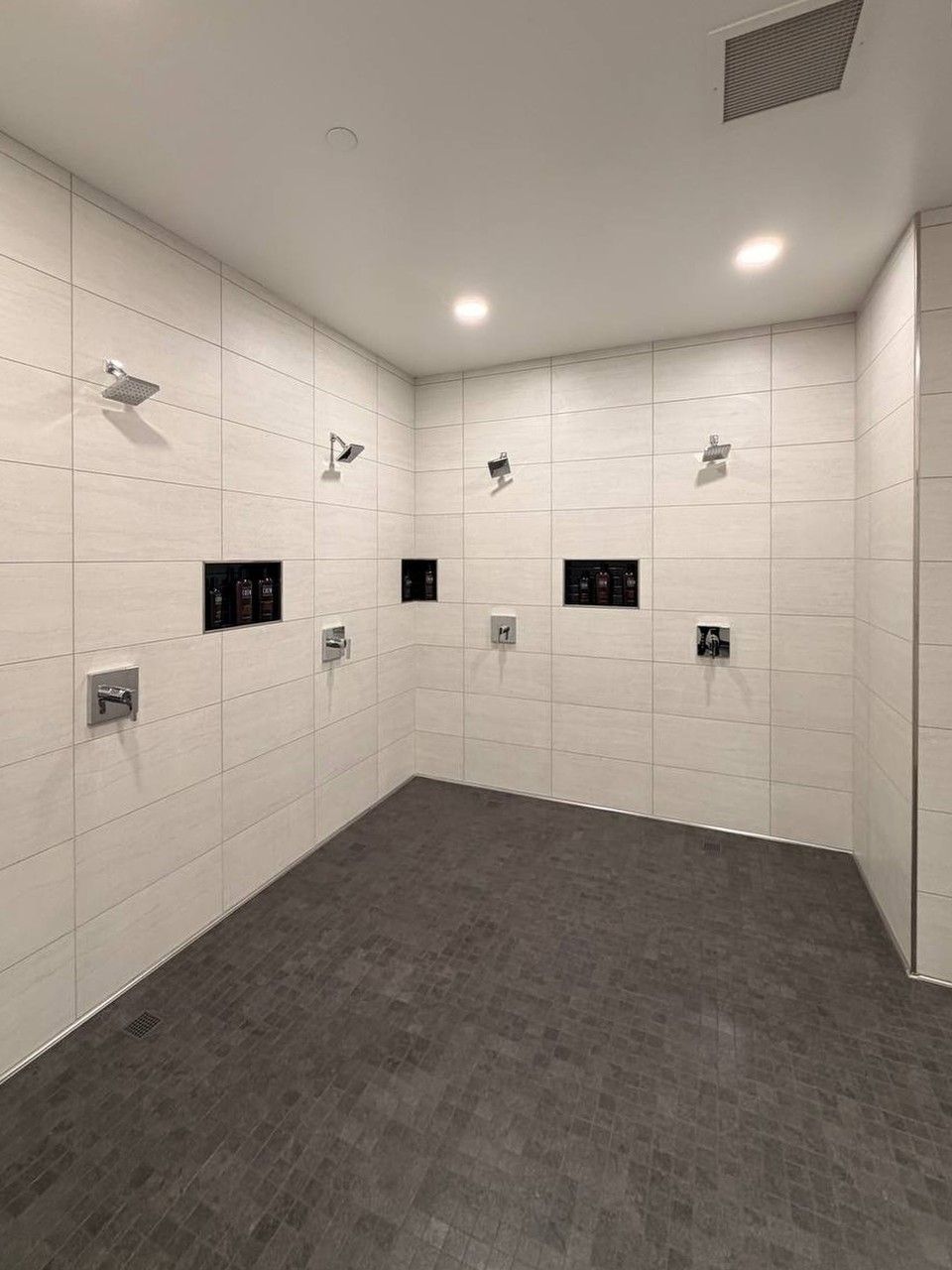
How will you waterproof the shower?
You want a specific answer: which membrane or system, where it goes, and how the corners and the drain are handled. Cement board on its own isn’t waterproof, and neither are tile and grout. Ask whether the waterproofed base gets flood tested before tile goes on. Plugging the drain and leaving water in it for 24 hours is a common check. It tests the floor and curb, not the walls.
How do you get the slope right?
Water has to reach the drain on its own. Shower floors slope at least a quarter inch per foot, about 2 percent. Ask how the base is built and how they check it.
What do you do about an uneven floor?
The bigger the tile, the flatter the floor has to be. On an uneven floor, one tile edge sits higher than the next, and with large format you’ll see it and feel it. Ask how they check the floor and what they use to level it.
Will you show me the layout first?
Where the first line goes decides whether you end up with thin slivers at the wall, and whether the joints line up with the door, the niche or the vanity. Ask to see it marked out before the first tile is set.
Where will the movement joints go?
Tile doesn’t flex, and buildings move, especially on Winnipeg clay. Soft joints filled with flexible sealant belong at the walls, at changes of plane and across large areas. If someone tells you they aren’t needed, keep looking.
What’s in the price, and what isn’t?
Demolition, disposal, levelling compound, membranes, trims and sealing are easy to leave out of a low quote. Get them in writing. Our guide on what moves the price has a full list.
Who will actually be on site?
The person who quotes the job isn’t always the person who sets the tile. Ask who will be there. With us, you deal with the owners, Andrii Talposh Sr. and Andrii Talposh Jr.
Can I see close-ups of finished work?
Wide shots of a nice room don’t tell you much. Ask for close-ups of corners, edges and transitions, because that’s where the difference shows. Ours are here.